
Organization, church and community
Get to know SOKU, the people behind the organization, our collaborations, our diocese and our bishop. Here you will also find statutes, policies, logos and our archive.
01
OUR BUSINESS
About us
About us
SOKU – by young people, for young people
The Syriac Orthodox Church Youth Union (SOKU) was founded in 1996 by the youth of the Syriac Orthodox Church for young people.
SOKU is a nationwide organization with 20 local associations around the country. Today, SOKU has around 7,000 members around Sweden. The organization's members belong to the Patriarchal Representative Council of the Syrian Orthodox Church in Sweden.
SOKU is an association that works to ensure the interests of Syrian youth on the religious, cultural and social levels. The organization organizes an annual choir festival, a Bible competition, several camps, theme days with a church and spiritual focus, weekend courses, lectures and much more for its members.
We work to give young people meaningful leisure time within the Syriac Orthodox Church.
SOKU works tirelessly to engage young people in voluntary activities. We organize regular training courses for boards where topics such as association techniques, association finances, communication, conflict management and leadership are covered in order to best support young people who are involved in voluntary activities.
The training also touches on the rules of democracy, its principles and democratic processes.
SOKU's office provides support to the federal board, committees, local associations, members, and other stakeholders and partners such as other Syrian organizations and Swedish authorities.
Peace of God!
SOKU
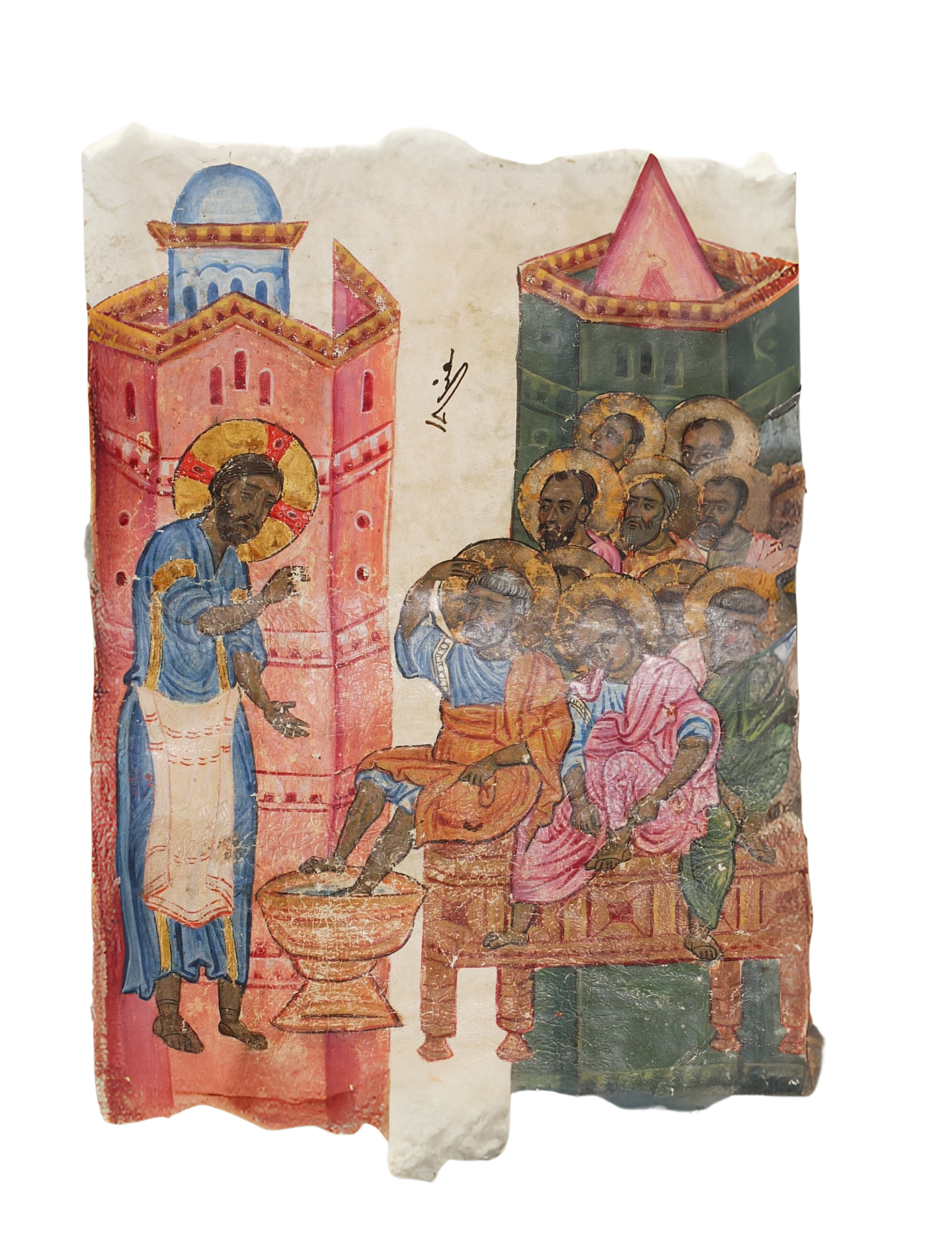
SOKU was founded by young people for young people.
03
COOPERATION
Partners
Partners
Collaborations that strengthen operations
SOKU collaborates with church, cultural and civil society organizations to strengthen youth activities, community and education within the Syriac Orthodox Church in Sweden.
Student Union Bilda
Bilda is a non-profit, non-partisan organization that encourages people's search for knowledge and development through study groups, courses, projects and other activities.
Folkbildning i de Orthodoxa Kirkorna (OBK) has a close collaboration with the Syriac Orthodox Church in Sweden. OBK offers tools for educational and cultural activities and supports activities such as Orthodox scouting, icon painting and courses in conflict management, association techniques and leadership training.
Saint Ignatios Folk High School
In 2012, the Byzantine and Oriental Churches, together with Bilda and Botkyrka Folk High School, started a center for Eastern Orthodox studies and education, which was later transformed into the Saint Ignatius Spiritual Academy.
Sankt Ignatios Folkhögskola became an independent folkhögskola with state funding in 2016 and the academy is also part of the Stockholm School of Theology. Sankt Ignatios today offers everything from basic qualifications in general subjects to doctoral education in theology with an Eastern Orthodox focus.
Orthodox Advisory Group in Bilda
The Orthodox Consultation Group is a meeting place where experiences and knowledge are exchanged.
The youth organizations affiliated with this network are SOKU, the Syriac Orthodox Youth Union (SOUF), the Coptic Orthodox Church Youth Union (KOUF), and the Suryoyo Orthodox Scout Union (SOSF).
The network is composed of two representatives from each union and one employee from Bilda.
Suryoyo Sat
Bahro Suryoyo Media Association (Suryoyo Sat) was founded by the four nationwide organizations SOKU, the Diocese Board of the Syrian Orthodox Church (SOK), the Syrian National Federation (SRF) and the Syrian Aramean Youth Federation (SAUF).
Suryoyo Sat is an international venture with associations in Germany, Holland, Belgium, Switzerland and Austria. SOKU has every opportunity to influence the channel's work, range of programs and broadcasts. The majority of SOKU's activities are broadcast on the channel.
Collaborating organizations
Church & Orthodox
- Diocesan Board of the Syriac Orthodox Church in Sweden, SOK
- Syriac Orthodox Youth Union, SOUF
- Coptic Orthodox Youth Union, KOUF
- Patriarchate of the Syriac Orthodox Church, Damascus
- Monastery of the Cross
- Suryoyo Orthodox Scout Federation, SOSF
Syrian & Cultural
- Syrian Aramaic Youth Union, SAUF
- The Syrian National Federation in Sweden, SRF
- Syrian Alliance in Sweden, SAS
- Syriac Universal Alliance, WCA
- Suryoyo Sat
- Bahro Suryoyo
- Syrian Aramaic Academics Association, SAAF
Education & Civil Society
- Student Union Bilda
- Saint Ignatios Folk High School
- Botkyrka Folk High School
- The Swedish Agency for Youth and Civil Society Affairs, MUCF
- The National Council of Swedish Youth Organizations, LSU
Other collaborations
- Swedish Missionary Council, SMR
- Christian Council of Sweden, SKR
- The police
04
OUR CHURCH
Our diocese
Our diocese

Patriarchal vicariate
The Patriarchal Vicarage of the Syriac Orthodox Church in Sweden is one of two Syriac Orthodox dioceses in Sweden and has around 25,000 registered members.
History
The Syriac Orthodox Church has been active in Sweden since the 1970s, with its headquarters in Södertälje.
The Patriarchal Representative Office of the Syriac Orthodox Church in Sweden was officially established following a decision by the Holy Synod on June 16, 1994. The congregations previously belonged to the Syriac Orthodox Archdiocese of Sweden and Scandinavia but came to form their own diocese.
On February 11, 1996, the first archbishop of the diocese, HE Dioscoros Benjamin Atas, was consecrated. The archbishop has since resided in St. Afrem Cathedral.
Organisation
The Patriarchal Vicarage of the Syriac Orthodox Church in Sweden has around 26 local parishes served by around twenty priests, with the Archbishop as chairman.
Fr. Yusuf Atas is the assistant vicar of the archbishop, Fr. Numatalla Dabbag is the secretary, Fr. Chabo Elkhoury is the advisor and Fr. Süleyman Wannes is the responsible and representative for inter-church and ecumenical issues.
The Priestly Council for spiritual matters, led by the Archbishop, and the Diocesan Board for administrative and financial matters.
The headquarters of the diocese – St. Afrem's Cathedral
St. Afrem's parish was founded in 1971 at the request of the newly arrived Syrians in Södertälje. The parish was granted a building permit in 1981 and the cathedral began to be used in 1983.
The church is thus the first Syriac Orthodox Church in Sweden and among the first churches to be established in Europe. In 1987, the church was officially consecrated by the head of the church, His Holiness the late Patriarch Ignatius Zakka I Iwas.
SOKU and the diocese
SOKU and the Patriarchal Delegation of the Syriac Orthodox Church in Sweden have a close and good cooperation on many issues that affect the youth of the church. SOKU's members belong to the Patriarchal Delegation.
Related organizations
The diocese also collaborates with several organizations such as the Syrian National Association, the Syrian-Aramaic Youth Association (SAUF), the Syrian-Aramaic Academic Association (SAAF) and Syrianska FC.
Media channel
The diocese is one of the principals of the Syriac-Aramaic channel Suryoyo Sat.
Membership fee via the Swedish Tax Agency
The diocese collects membership fees through the Swedish Tax Agency. This means that all members have the opportunity to pay their membership fees through their tax return.
The membership fee is 1 % of your taxable earned income after basic deductions.
05
SPIRITUAL LEADERSHIP
Our bishop
Our bishop
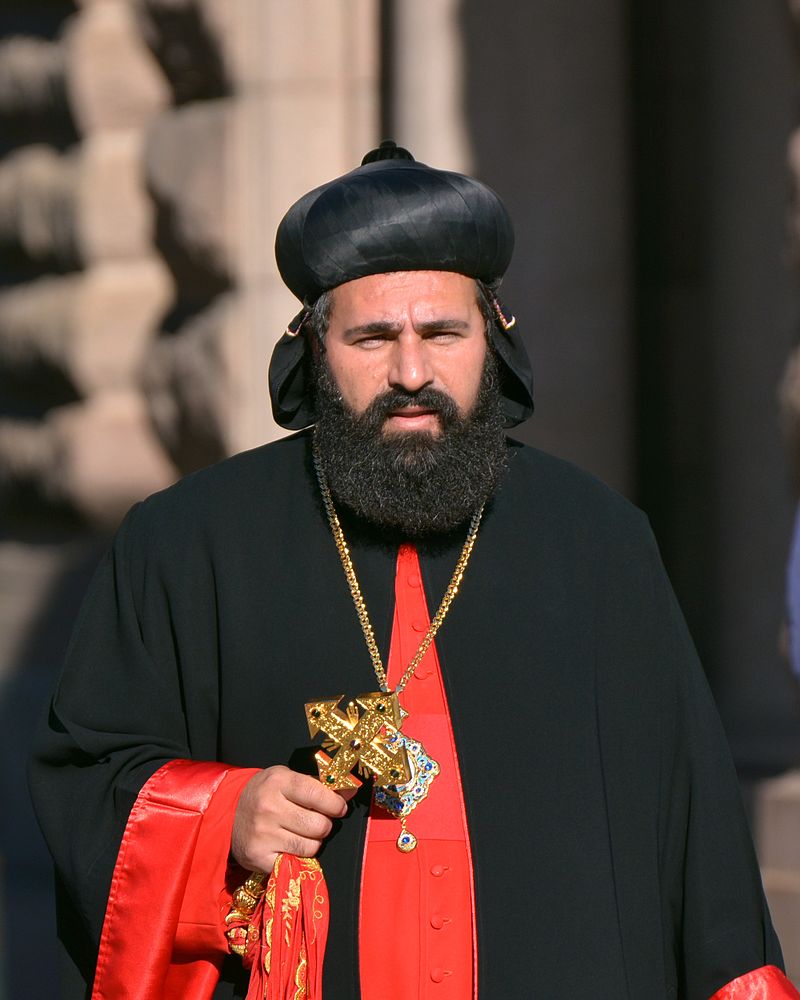
Archbishop
Dioskoros Benjamin Atas
His Eminence Archbishop Dioskoros Benjamin Atas is the Patriarchal Vicar of the Syriac Orthodox Church in Sweden. Since his ordination as bishop in 1996, he has worked for the development of the church, the work of the parishes, and the preservation of the church's Syriac and liturgical heritage.
From Tur Abdin to Sweden
Mor Dioskoros was born in Beth Kustan in Tur Abdin, southeastern Turkey. From a young age, he was taught the Syriac language, the Christian faith, and the liturgical tradition of the Syriac Orthodox Church.
In 1981 he moved with his family to Sweden. His ecclesiastical calling later took him to the Monastery of Saint Ephraim in the Netherlands, where he studied Syriac, church history and church tradition.
Church service
After being ordained a monk in 1988, Hans Eminens was ordained a priest the following year. He then continued his studies and his church service in Europe, the Middle East and the United States.
On February 11, 1996, he was consecrated as Archbishop by Patriarch Mor Ignatius Zakka I Iwas to the Patriarchal Vicarage of the Syriac Orthodox Church in Sweden and was given the episcopal name Dioskoros.
The service in Sweden
As Patriarchal Vicar, Archbishop Dioskoros Benjamin Atas has worked for the development of the Syriac Orthodox Church in Sweden. His work has particularly included the church life of the congregations, youth, theological education, and the preservation of the Syriac language and the church's spiritual and liturgical heritage.
The Archbishop has been involved in the ecumenical movement for a long time. He has been elected chairman of the Christian Council of Sweden (SKR) for the terms of office 2014–2015, 2018–2019, 2022–2023 and 2026–2027.
In 2022, Archbishop Dioscoros Benyamin Atas was praised for his many years of contributions to Swedish ecumenism and was awarded a medal by HRH Prince Carl Philip.
The Archbishop has also previously been awarded medals for his solid work for the church and society, including by the Patriarch of the Serbian Orthodox Church, His Holiness Patriarch Irinej, during his apostolic visit to Sweden in 2014.
06
GOVERNING DOCUMENTS
Articles of association
Articles of association
Syriac Orthodox Church Youth Union
Here you can read SOKU's statutes directly on the website. You can also open or download the original document as a PDF.
Can't see the document? Open the statutes as a PDF here.
07
SAFETY & RESPONSIBILITY
Policies
Policies
SOKU's policy document
Whistleblower policy
SOKU wants to be a safe and open organization. In our whistleblower policy you can read about how serious misconduct can be reported safely, how cases are handled and what protection the reporter has.
The policy applies to the entire SOKU and exists to strengthen security, responsibility and trust in the organization.
Download PDF ↓Respect trust
At SOKU, our work is built on trust and respect. This policy is about how we handle internal conversations, messages, documents and trust.
It explains why it is important not to disseminate information without consent, and how we can raise questions or criticism in a respectful manner.
Download PDF ↓Travel policy
SOKU's travel policy describes how travel within the union should be planned and carried out in a safe, responsible and sustainable manner.
The policy addresses, among other things, responsibility, finances, safety, participant rules, sustainability and follow-up after the trip. It applies to trips arranged in the name of SOKU, both in Sweden and abroad.
Download PDF ↓Ethical guidelines
SOKU's ethical guidelines describe how we together create a safe, respectful and inclusive environment for children and young people.
Here you will find guidance on leadership, treatment, communication, democracy, safety and how to handle violations or conflicts.
Download PDF ↓Everyone's equal rights in SOKU
”"Equal rights for everyone in SOKU" is a policy and sustainability agreement that brings together important guidelines for how SOKU should work with security, democracy, inclusion and sustainability.
The document deals with, among other things, everyone's equal value, member influence, language, finances, environment, activities and responsibility in the organization.
Download PDF ↓
08
SAFE ORGANIZATION
Whistleblowing
Whistleblowing
Report serious misconduct
SOKU wants to be a safe and open organization.
For this reason, there is a safe way to report serious misconduct. Anyone who reports in good faith has legal protection against retaliation.
Without information from people with insight, many wrongdoings would never come to light. Here you can provide information that may be sensitive.
How do I report a case?
You can report in your own name or anonymously. This can be done via a special email address, physical letter or personal meeting.
What information should be provided?
- What happened, when and where
- Who are the people involved?
- If there is documentation or witnesses
- Why you suspect an affair
09
GRAPHIC PROFILE
Logos
Logos
Download logos
Here you will find SOKU's logos and crosses in different versions and file formats. Click on the respective button to download the file.
SOKU logo – JPG
Download JPG ↓
SOKU without background
Download PNG ↓
SOKU black
Download PNG ↓
SOKU white
Download PNG ↓
Inverted cross logo
Download PNG ↓SOKU logo – PDF
Download PDF ↓
Cross – transparent background
Download PNG ↓
Cross – transparent
Download PNG ↓
SOKU cross
Download PNG ↓
Cross – inverted
Download PNG ↓
Cross – right
Download PNG ↓
Cross – left
Download PNG ↓
10
SOKU THROUGHOUT THE YEARS
Archive
Archive
Part of SOKU's history
The archive collects news, articles, images and material from SOKU's activities over the years.
Visit the archive →”Give me a spirit of humility, patience and love.”
– Saint Ephraim the Syrian